Echoes of the Skanda Purana: The Spiritual Law of Karma, Compassion, and Conscious Living
In a fast-paced modern world, we often look outward for rules on ethics, wellness, and mental peace. However, ancient Vedic literature provides a profound, time-tested blueprint for living a life of harmony. A sacred excerpt from the Skanda Purana offers timeless insights into the interconnectedness of all living beings, the multi-dimensional nature of karma, and the ultimate supremacy of non-violence (Ahimsa). Here are the core pillars of wisdom extracted from these sacred verses, offering guidance on how we can live more conscious and elevated lives today.
1. The Cosmic Law of Reciprocity: The Echo of Joy and Sorrow
At the heart of the Purana’s teachings lies a fundamental truth about human action and its energetic consequences:
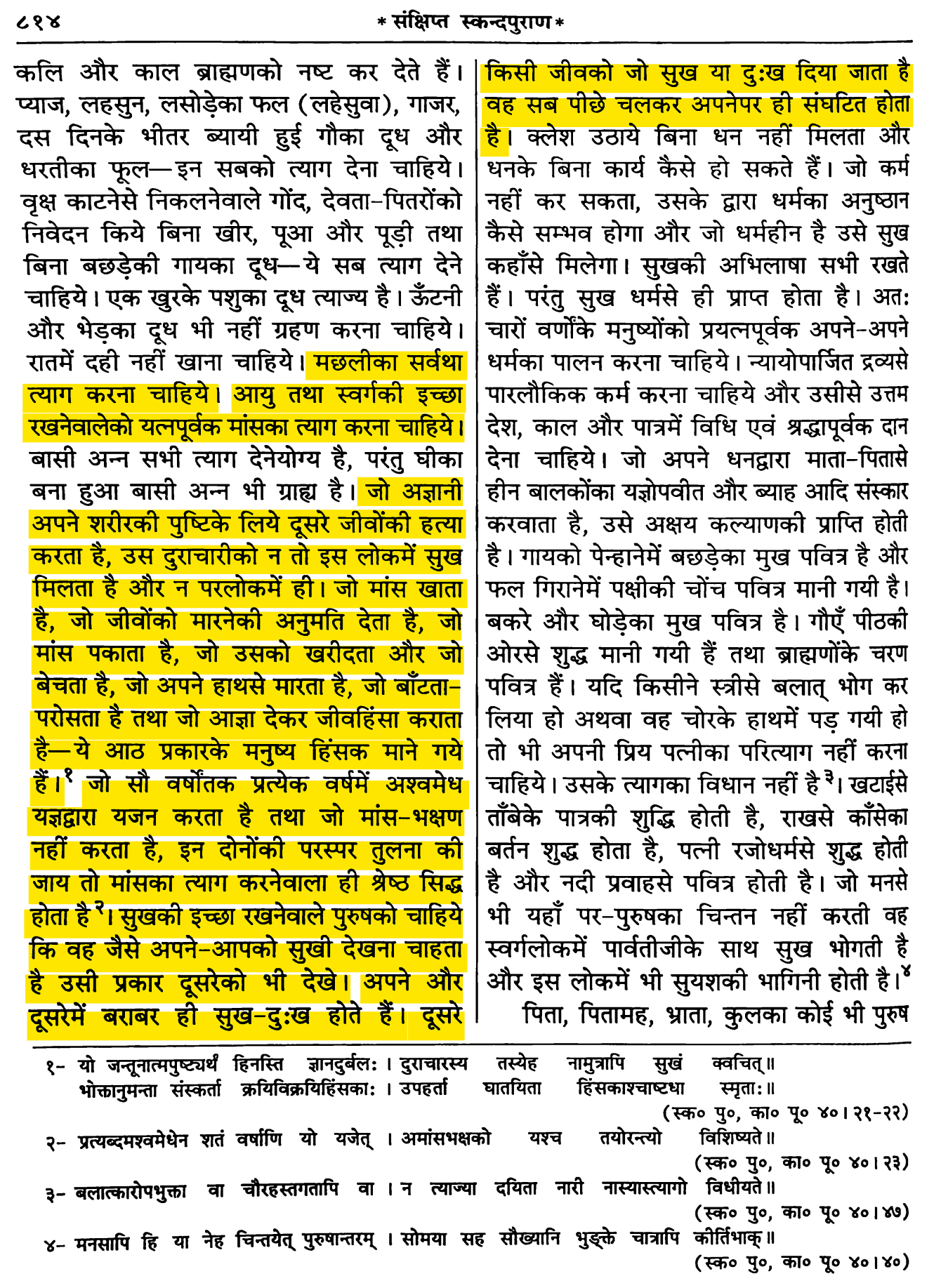
"Whatever joy or sorrow is given to any living being, eventually accumulates and returns to oneself."
This is the pure definition of Karma. The text reminds us that the universe acts as a mirror. We cannot plant seeds of distress for others and expect a harvest of happiness for ourselves. Every emotion, pain, or comfort we inflict on the world around us is an investment in our own future reality.
2. Radical Empathy: Seeing Yourself in the 'Other'
True spiritual maturity begins when the boundary between "self" and "other" dissolves. The Skanda Purana beautifully instructs that a person seeking true happiness must view all living entities through the lens of equality:
"Just as a person wishes to see themselves happy, they should look at others in the exact same way. Joy and sorrow are felt equally by oneself and by others."
This teaching challenges us to practice active empathy. It moves us past simple sympathy and forces us to recognize that the life force inside every creature experiences pain, fear, joy, and comfort in precisely the same way we do.
3. The Eightfold Share in Violence: A Lesson in Broad Responsibility
One of the most striking and socially relevant sections of the text deals with the ethics of consumption. The Purana explicitly expands the definition of violence beyond the person who commits the physical act. It identifies eight types of people who share the karmic burden of violence when an animal is killed for food:
- The one who grants permission for the killing.
- The one who executes the physical slaughter.
- The one who cooks the meat.
- The one who buys it.
- The one who sells it.
- The one who serves or distributes it.
- The one who physically eats it.
- The one who arranges or orders the termination of a life.
By breaking down this chain of demand and supply, the text teaches us about systemic accountability. It reminds us that our choices as consumers are not isolated; when we purchase or support products born out of exploitation, we remain an active link in that chain of suffering.
4. Vegetarianism vs. Grand Rituals: The Value of Daily Choices
In ancient times, performing an Ashwamedha Yajna (a massive, highly complex year-long royal ritual) was considered the pinnacle of religious merit. Yet, the Skanda Purana makes a revolutionary comparison to emphasize the spiritual weight of a cruelty-free life:
"If we compare a person who performs the Ashwamedha Yajna every year for a hundred years, and a person who completely gives up the consumption of meat—the one who renounces meat is deemed superior."
This profound statement democratizes spiritual growth. It implies that grand, expensive displays of faith and elaborate external rituals hold less spiritual value than the quiet, daily commitment to compassion, restraint, and protecting the vulnerable.
Bridging the Ancient and the Modern
The teachings highlighted in this section of the Skanda Purana are not outdated dogmas; they are highly advanced psychological and ecological truths. They urge us to look at our diets, our lifestyle choices, and our daily interactions through a lens of universal responsibility. By understanding that everything we give out eventually returns to us, we can begin to cultivate a life rooted in Ahimsa—ensuring that our happiness is never built upon the unhappiness of another living being.
Skanda Purana - Page 814 - Gita Press Gorakhpur
Ref:
Related Topics
- Meat Eating Prohibited for Seekers of Heaven - Skanda Purana
- The Equine Romance of Surya Dev: How the Twin Ashvini Kumars Were Born - Markandeya Purana
- Brahma's Infatuation towards his own Daughter - Matsya Purana
- The Legend of Brahma and Amogha: Padma Purana
- The Day Goddess Parvati Caught Shiva: The Untold Legend of Kshemankari Devi - Padma Puran
- Devi Purana
- Shiv Purana
- Markandeya Puran
- Kurma Purana
- Padma Purana
- Skanda Purana
- Brahm Purana
- Bhavishya Purana
- Brahma Vaivarta Purana
- Bhagavata Purana or Shrimad Bhagavatam
- Why Did Rama Reject Sita? Decoding Yuddha Kanda in the Valmiki Ramayana
- Wine and Meat in the Ramayana? What Valmiki Wrote About Rama and Sita
- Brahma, Vishnu and Shiva Are Mortal - Kurma Purana - The Supreme God Is Kavi (Kavir Dev)
- Origin of Shiva, Vishnu, Brahma, and the Supreme Truth - Shiv Purana
- The Story Behind Shiva’s Phallic Form (Shivling) - Shiv Purana
- Why Did Lord Brahma Lose His Fifth Head - Shiv Purana
- The Bhasmasura Episode - Shrimad Bhagavatam
- King Parikshit and the Five Abodes of Kali Yuga - Shrimad Bhagavatam
- The Ordeal of Anusuya and the Conduct of Brahma, Vishnu, Shiva - Bhavishya Purana
- Kartikeya’s Birth in the Brahm Vaivarta Purana
- The Tulsi–Vishnu Narrative - Brahma Vaivarta Purana
- How did the Universe Originate - Devi Bhagavad Purana
- The Tale of the Hidden Kshar Brahm - Devi Bhagavat Purana
- The Cosmic Battle of Madhu and Kaitabha - Devi Bhagavata Purana
- The Mystery of two Brahma, Vishnu and Shiva - Devi Bhagavata Purana
- Vishnu, Shiva, and Brahma Realize Their Dependence on Goddess Durga - Devi Bhagavata Purana
- The Divine Marriages of Brahma, Vishnu, and Shiva — Devi Bhagavata Purana
- The Real Purpose of Pilgrimage - Devi Bhagavata Purana
- Teachings of Brihaspati and Shukracharya - Devi Bhagavata Purana
- The Story of Sage Ruchi - Markandeya Purana
- The Story of Sage Markandey and Indra: A Scriptural Warning Against Temporary Heavenly Pleasures
- The Controversial Shraddha Teachings of Queen Madalasa - Markandeya Purana
- Pururava Pilgrimage - Brahm Purana
- The Controversial Feast of Lord Shiva - Padma Purana
