The cosmic bond between Lord Shiva and Goddess Parvati is usually celebrated as the ultimate symbol of spiritual harmony, mutual respect, and ascetic devotion. From their divine marriage to their deep philosophical debates in the Himalayas, mainstream narratives paint a picture of unbroken serenity. However, buried deep within specialized Puranic scriptures and rare regional texts like the Panchakhyan, there exist ancient tales that explore a different side of the divine realm—tales where even the gods are tested by earthly illusions, leading to explosive cosmic showdowns. One of the most fascinating, rarely discussed episodes in Hindu mythology uncovers the origins of Kshemankari Devi, a fierce manifestation of Parvati born not from a battle with a demon, but from a moment of intense marital confrontation and absolute boundary-enforcement.
Core Narrative Summary:
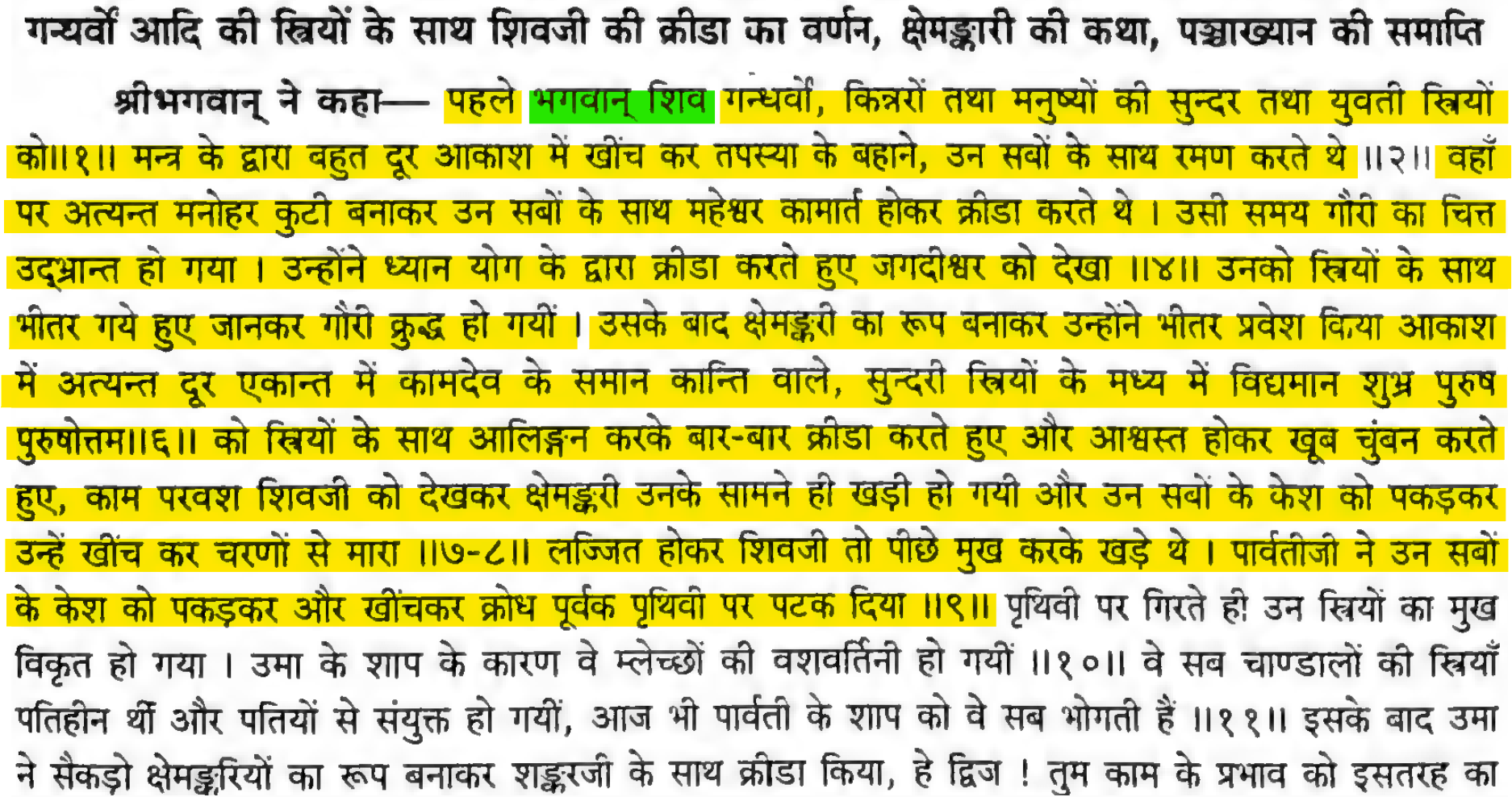
- The Pastime: Lord Shiva uses a mantra to attract beautiful young women belonging to the Gandharvas, Kinnaras, and humans into the deep sky under the pretext of meditation. He builds a beautiful hut and engages in amorous play with them.
- Gauri's Discovery: Goddess Gauri (Parvati) senses this, enters a deep meditative trance, and discovers Shiva interacting intimately with these women.
- The Confrontation: Filled with rage, Parvati transforms herself into the fierce form of Kshemankari and confronts Shiva in his hidden aerial retreat.
- The Punishment: She aggressively grabs the women by their hair and pulls them down to the Earth. Upon falling, their faces become deformed. Due to Parvati's curse, they lose their high status and are cast into lower worldly positions.
- The Resolution: To pacify the situation, Gauri assumes hundreds of identical "Kshemankari" forms to play with Shiva herself, illustrating the ultimate power and illusions of Kama (desire).
Padma Puran - Adhyay 56
Description of Shiva's playful pastimes with Gandharva women, the story of Kshemankari, and the conclusion of Panchakhyan (गन्धर्वों आदि की स्त्रियों के साथ शिवजी की क्रीड़ा का वर्णन, क्षेमङ्करी की कथा, पञ्चाख्यान की समाप्ति)
The Story of Kshemankari Devi: When Parvati Caught Shiva
When we think of the divine bond between Lord Shiva and Goddess Parvati, we envision a partnership built on cosmic balance, deep asceticism, and mutual respect. However, buried deep within specialized Puranic literature and local chronicles like the Panchakhyan, there are complex tales where even the gods are tested by earthly temptations—leading to explosive cosmic showdowns.
One such fascinating, rarely-discussed episode describes the origins of Kshemankari Devi, a fierce manifestation of Parvati born out of marital rage and absolute boundary-enforcement.
1. The Hidden Retreat in the Clouds
According to ancient scripture, the story begins when Lord Shiva uses a powerful mantra to summon beautiful young women from various realms—including Gandharvas (celestial musicians), Kinnaras, and human mortals. Under the guise of retreating for intense meditation (Tapasya), Shiva constructs a beautiful, hidden hermitage high up in the sky. It is here that he loses himself to the illusions of Kama (desire) and engages in amorous pastimes with his celestial assembly.
2. The Third Eye of a Wife: Parvati Explores the Truth
No secret remains hidden from the Mother of the Universe. Feeling an unexplained shift in the cosmos, Goddess Gauri (Parvati) enters deep meditative focus (Dhyana Yoga). As her spiritual vision expands across the sky, she locates Shiva's secret retreat. Witnessing the Lord of the Universe completely engulfed by earthly desires and surrounded by other women, her grief instantly hardens into immense, unyielding fury.
"The image of the calm, supportive consort dissolves. In her place stands a deity ready to shatter the illusion."
3. Enter Kshemankari: The Manifestation of Fury
Parvati does not simply confront Shiva in her gentle form. She transforms herself into Kshemankari Devi—a radiant, fierce warrior form whose beauty matches the blinding glow of Kamadeva (the god of desire), but whose energy is utterly destructive. She breaches the sky barrier and enters the retreat. The text vividly describes the scene: Shiva is caught completely off guard, openly showing affection to the celestial women. Without hesitation, Kshemankari takes action:
- The Direct Attack: She boldly steps between Shiva and the assembly.
- The Cosmic Fall: She grabs the hiding women by their hair and hurls them violently from the heavens down to the earthly soil.
- The Curse of Transformation: The impact with the earth alters their physical forms, and Parvati curses them to lose their high celestial lineages, casting them into difficult worldly lives as a karmic consequence for disrupting divine order.
4. A Humbled Deity and the Ultimate Illusion
What happens to the devastating Mahadev when caught? The ancient text notes an incredibly humanizing moment: Lord Shiva stands completely ashamed, turning his face away in sheer embarrassment.
To heal the rift and conclude the cosmic lesson, Parvati demonstrates her ultimate supremacy over desire. She multiplies her form into hundreds of beautiful "Kshemankaris," surrounding Shiva and showing him that everything he sought externally already resided within his divine counterpart.
Summary: The Cosmic Lesson Behind the Legend
What makes legends like the story of Kshemankari Devi profoundly striking is their willingness to humanize the absolute highest tiers of the divine hierarchy. In mainstream devotion, Lord Shiva is revered as Mahadev—the ultimate ascetic, the conqueror of the mind, and the destroyer of ego. Yet, obscure Puranic fragments like this narrative do not shy away from a startling reality: even the supreme deity of yoga can find himself entirely consumed, distracted, and "infested" by the raw, overpowering pull of Kama (sexual desire and worldly illusion).
Ref:
Related Topics
- Meat Eating Prohibited for Seekers of Heaven - Skanda Purana
- The Equine Romance of Surya Dev: How the Twin Ashvini Kumars Were Born - Markandeya Purana
- Brahma's Infatuation towards his own Daughter - Matsya Purana
- The Legend of Brahma and Amogha: Padma Purana
- The Day Goddess Parvati Caught Shiva: The Untold Legend of Kshemankari Devi - Padma Puran
- Devi Purana
- Shiv Purana
- Markandeya Puran
- Kurma Purana
- Padma Purana
- Skanda Purana
- Brahm Purana
- Bhavishya Purana
- Brahma Vaivarta Purana
- Bhagavata Purana or Shrimad Bhagavatam
- Why Did Rama Reject Sita? Decoding Yuddha Kanda in the Valmiki Ramayana
- Wine and Meat in the Ramayana? What Valmiki Wrote About Rama and Sita
- Brahma, Vishnu and Shiva Are Mortal - Kurma Purana - The Supreme God Is Kavi (Kavir Dev)
- Origin of Shiva, Vishnu, Brahma, and the Supreme Truth - Shiv Purana
- The Story Behind Shiva’s Phallic Form (Shivling) - Shiv Purana
- Why Did Lord Brahma Lose His Fifth Head - Shiv Purana
- The Bhasmasura Episode - Shrimad Bhagavatam
- King Parikshit and the Five Abodes of Kali Yuga - Shrimad Bhagavatam
- The Ordeal of Anusuya and the Conduct of Brahma, Vishnu, Shiva - Bhavishya Purana
- Kartikeya’s Birth in the Brahm Vaivarta Purana
- The Tulsi–Vishnu Narrative - Brahma Vaivarta Purana
- How did the Universe Originate - Devi Bhagavad Purana
- The Tale of the Hidden Kshar Brahm - Devi Bhagavat Purana
- The Cosmic Battle of Madhu and Kaitabha - Devi Bhagavata Purana
- The Mystery of two Brahma, Vishnu and Shiva - Devi Bhagavata Purana
- Vishnu, Shiva, and Brahma Realize Their Dependence on Goddess Durga - Devi Bhagavata Purana
- The Divine Marriages of Brahma, Vishnu, and Shiva — Devi Bhagavata Purana
- The Real Purpose of Pilgrimage - Devi Bhagavata Purana
- Teachings of Brihaspati and Shukracharya - Devi Bhagavata Purana
- The Story of Sage Ruchi - Markandeya Purana
- The Story of Sage Markandey and Indra: A Scriptural Warning Against Temporary Heavenly Pleasures
- The Controversial Shraddha Teachings of Queen Madalasa - Markandeya Purana
- Pururava Pilgrimage - Brahm Purana
- The Controversial Feast of Lord Shiva - Padma Purana
